
The Impact of Smart WiFi on Brick-and-Mortar Commerce: How Connectivity Drives Average Ticket and Customer Loyalty
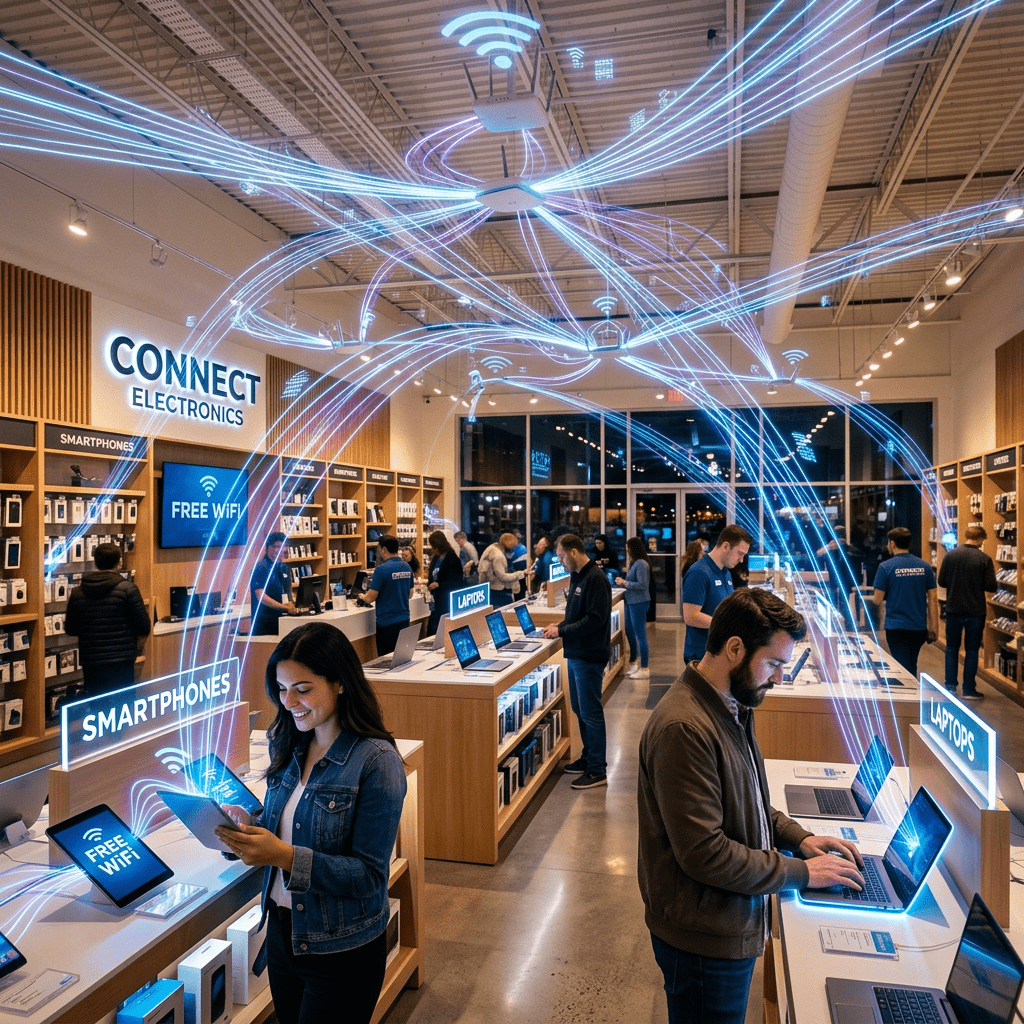
In the digital era, offering free WiFi in a commercial establishment is no longer just an added value; it is a basic infrastructure that consumers expect. However, for brands and retailers, the true value lies not merely in providing internet access, but in transforming that connectivity into a business intelligence tool.
Through Smart WiFi, brands are converting a traditional service into a direct marketing, first-party data capture, and commercial automation channel.
Recently, at aiwifi, we conducted an aggregate analysis of consumer behavior and user interaction across various business units in Mexico that have implemented our technology. The results demonstrate the direct impact that an optimized network has on revenue and customer retention.
1. Boosting the Average Ticket (+39%)
One of the most significant findings from our internal metrics reveals that customers who connect to Smart WiFi register an increase of up to 39% in their average purchase ticket compared to unconnected customers.
What drives this increase?
- Extended Dwell Time: A user connected to a stable, high-speed network tends to prolong their stay at the establishment (such as restaurants, coffee shops, department stores, or entertainment centers). Longer dwell times directly correlate with a higher probability of consumption or impulse buying.
- Digital Interaction at the Point of Sale: Upon entering the network through a captive portal (Splash Page), the business can display promotional banners, daily deals, or personalized product suggestions directly on the user’s smartphone screen, incentivizing consumption at that exact moment.
2. Accelerated Adoption of Loyalty Programs (+35%)
The second major pillar of the study showed that the implementation of Smart WiFi increases the adoption and enrollment rate in loyalty programs by 35%.
Traditionally, signing up for a rewards program can be a tedious process for the customer (filling out physical forms, downloading additional apps, or dictating personal data at the counter). Smart WiFi eliminates these points of friction:
- One-Click Registration: When connecting to the network, the system can automatically link the user’s access to the establishment’s loyalty program using fast authentication methods like social media or email.
- Automated Retargeting Strategies: Once the user is part of the database, the business can automate the delivery of discount coupons, birthday greetings, or satisfaction surveys, ensuring customers return more frequently.
Conclusion: WiFi as a Revenue Center
The data confirms that smart connectivity should not be viewed as an operating expense, but as a revenue generator and an invaluable source of analytical data for decision-making. By understanding who visits the point of sale, how often they visit, and what their preferences are, brands can design tailored experiences that directly impact business profitability.
Legal Disclaimer
The data and percentages presented in this article correspond to specific case studies, aggregate analyses, and internal metrics collected by aiwifi across samples of commercial establishments within the national territory during the 2025–2026 periods. These results represent success cases observed under optimal implementation conditions and do not constitute a promise or guarantee of identical future results, as actual performance and consumer behavior may vary based on the commercial sector, geographic location, marketing strategy, and operational conditions of each establishment.

